Rail Fence Story
Feb. 8, 2009
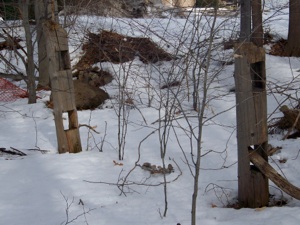
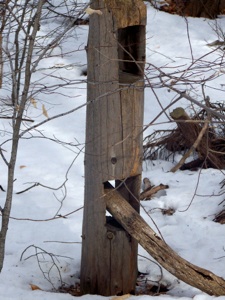
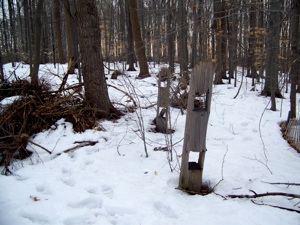
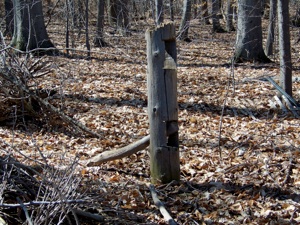
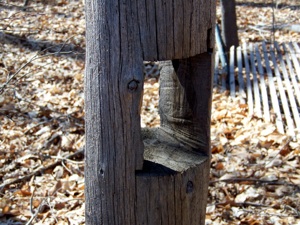
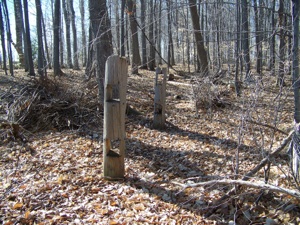
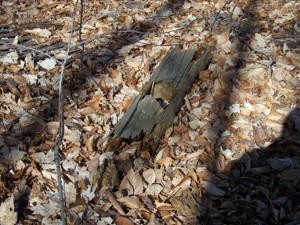
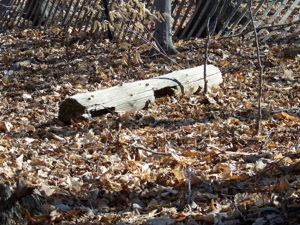
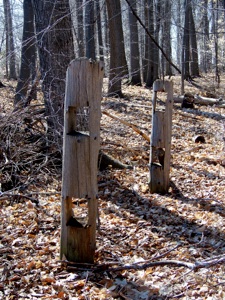
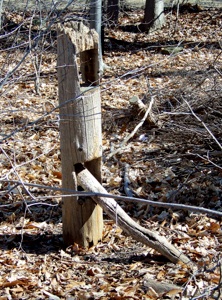
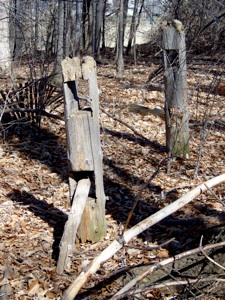
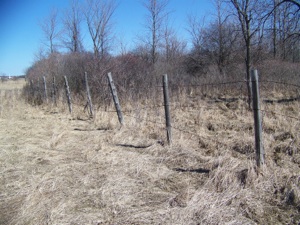
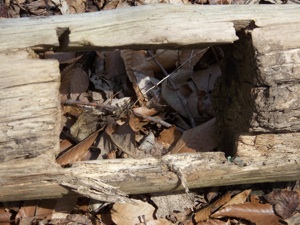
“The rail fence extolled a level of craftsmanship not to be found in the worm fence. It was confined to more intensively cultivated areas, but was completely American in design. It was an image of achieved order: evidence of cultivation and stability.” p158
“A cedar-rail fence might stand as an orderly structure for only six years..” p199
Post & Rail Fence / Post & Hole Fence
The Purpose of Fencing: To keep animals out of fields and off cultivated land.
Fences & gates are to farm fields what walls and doors are to a barn or mill.
Fences contain the workspace and give access to it.
The Responsibility of Fencing: The cultivator must protect his crops.
Fencing: Proliferated with mixed farming, both along boundaries and within farms
Every field had to be enclosed so that livestock could be moved from one to another, from season to season.
Respectable-looking Fences: Deliberately built began to become evident about the middle of the 19 century.
Fence Types: Mirror the relative availability of land, labor, capital and entrepreneurship
Robert Frost: “Good fences make good neighbors....”
Rails: Poles were selected & straight grained logs stored for splitting into rails.
Fences: contributed positively to maintaining community order.
Types: Virginia Fence, or worm, snake or zigzag.....most innovative & widely adopted.
Types: in 1850 America: Zigzag @ 79%, Post & Rail 14%, Stone 6%
Zigzag: Constructed by laying horizontally a set of 6 to 10 slender 10’-12‘ long poles, interlocked @ right angles
Zigzag: Required enormous amounts of timber but little labor to erect.
Zigzag: Self supporting, requiring no post holes, no nails or pegs, no mortises or ties, easier to repair & move.
Zigzag: Abraham Lincoln, nicknamed “the railsplitter” could split 150 rails in a day
Zigzag Wood: Oak, Black-Locust, Walnut or American Chestnut.....
Zigzag: Worm, snake, Virginia splitrail, crooked rail, rick-rack, zig zag - by any name, traditionally stacked split rail fencing dominated the American fence landscape for over 200 years. A genuine American innovation, it was described in the colonies as early as 1652 in Hampton, Long Island. By the 1870's, traditionally split rail fencing was the predominant fence type throughout the country (some sources indicating as much as 4 million miles!).
Post & Rail: Required far less wood, but considerable labor in digging post holes, & holes in uprights.
Post & Rail: Invention of the spiral auger after 1800 for post-hole digging increased popularity
Post & Rail: The mortising of the uprights was both time-consuming and a moderately skilled job.
Post & Rail: Digging holes two to three feet deep & nine foot apart.
Post & Rail: Restricted to areas of more intensive cultivation
Post & Rail: Extolled a level of craftsmanship not to be found in the zigzag fence.
Post & Rail: Marks a transition from wide and portable to narrow and fixed.
Post & Rail: A Cedar-rail fence might stand as an orderly structure for only six years.
Post & Rail: Completely American in design.
Post & Rail: The farmer cut three or four holes through posts six or seven feet long, set in ground, inserted rails.
Post & Rail: Wood: Eastern Red Cedar or American Chestnut
Osage orange: Made thick, thorny hedgerows four feet wide and five feet high that they boasted were:
“horse-high, pig-tight, and bull-strong”...hedgerows, lasted only a decade to 1857
Barbed Wire: invented in 1873